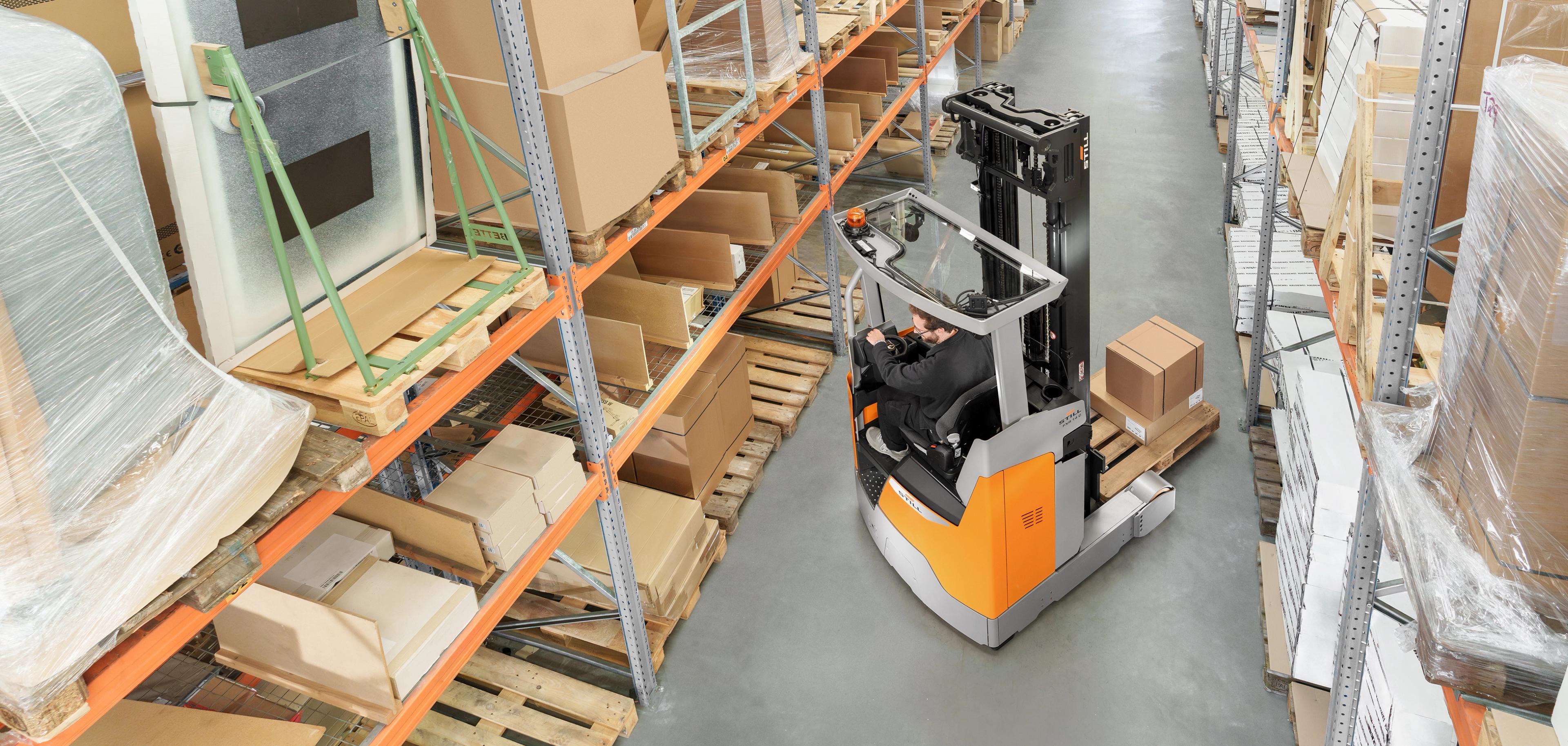
AGV - Automated Guided Vehicles
Driverless and autonomous forklifts for efficient warehouse operations
The AGV solutions from Linde and STILL make it possible to automate material handling in the warehouse and reduce manual, repetitive tasks. An Automated Guided Vehicle (AGV) is a self-driving, driverless truck that can transport goods without human involvement, either by towing or carrying loads.
All types of industrial trucks with manual operation can be purchased as an AGV model, including L-MATIC pallet stackers, K-MATIC aisle trucks, P-MATIC tow tractors, R-MATIC counterbalance trucks and several other solutions that can be easily adapted to different warehouse layouts. This includes autonomous forklifts, pallet stackers, counterbalance trucks, reach trucks and very narrow aisle trucks.
See the full overview of the AGV solutions we offer.
Benefits in Daily Operations
- Measurable return on investment (ROI) – automation reduces operating costs, increases productivity and provides measurable gains over time.
- More efficient material flow – AGVs take over repetitive transport tasks, allowing employees to focus on more value-creating work.
- Stable and predictable processes – continuous 24/7 operation enables optimized material flows and higher capacity.
- Increased safety – precise navigation reduces damage to goods and infrastructure, while minimizing the risk of accidents.
- Can also be used manually – AGVs can be driven manually when needed and integrate easily into existing warehouse processes.
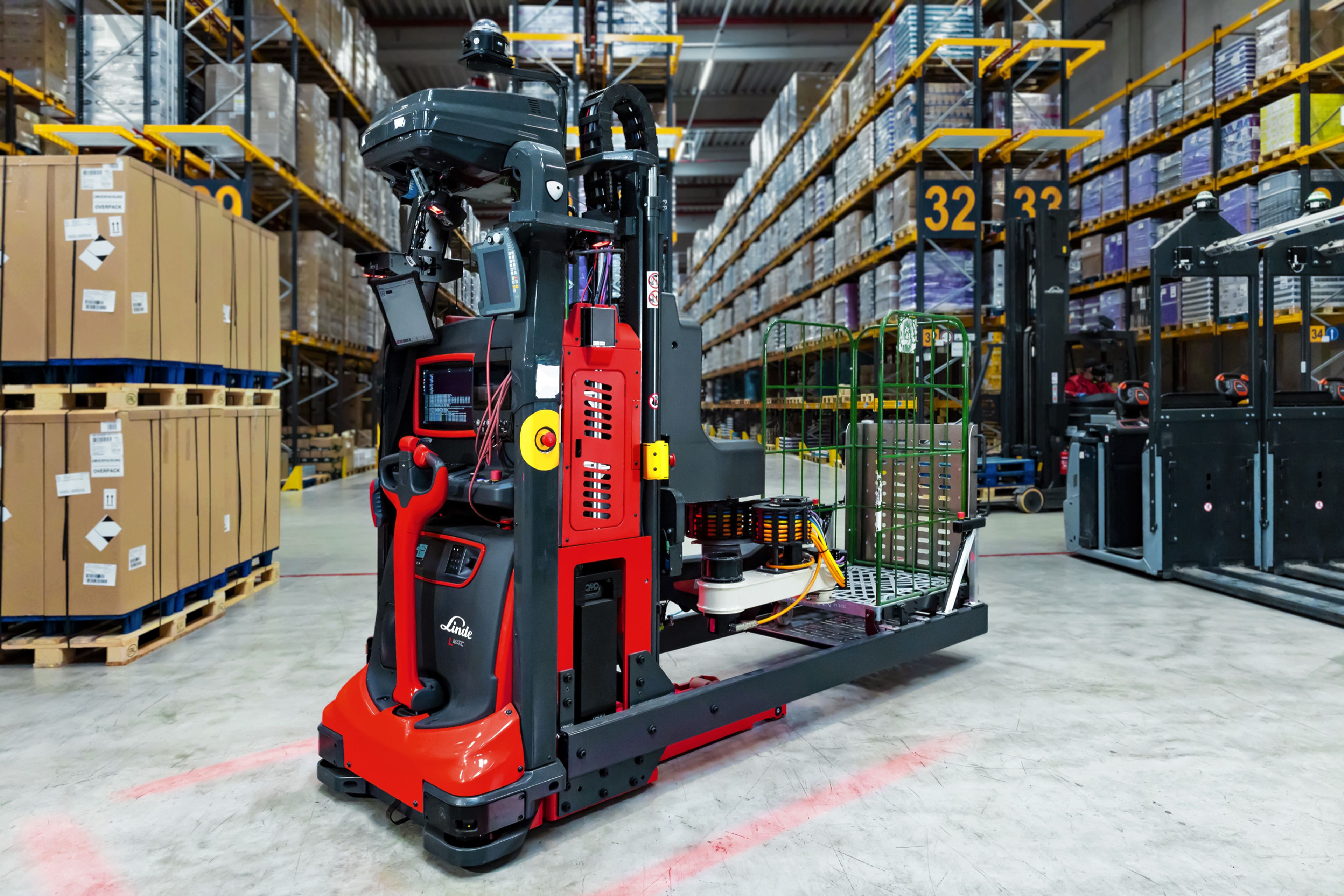
Types of navigation technology
An AGV can navigate in different ways, depending on technology and use case. In the past, many AGVs were guided by markers on the floor, such as tape or magnets, but today laser and SLAM-based navigation are used almost exclusively. These methods provide far higher precision and flexibility and require no fixed floor installations.
- Laser – uses lasers and reflectors for precise positioning.
- SLAM – sends out signals to create a digital map in real time and adjust travel routes in a changing environment.
Important considerations when using AGVs
- Speed and safety: Safety standards mean that autonomous forklifts navigate differently than manual forklifts. It may therefore be wise to plan routes outside the most heavily trafficked areas.
- Operating time: An AGV can work around the clock all year, interrupted only by charging.
Minimal infrastructure: Setting up an AGV solution requires far less infrastructure than conveyor belts, pallet conveyors or fixed transport systems, providing flexibility and lower costs when making changes in the warehouse.
AGVs as the foundation for a fully automated warehouse
With AGVs from Linde and STILL, you can start small and expand as needed. Many companies begin by automating a single process, such as pallet transport, and build gradually toward more complex solutions over time. This allows you to achieve quick gains and develop the system in line with growth and changing needs.