AMR – Autonomous Mobile Robots
Driverless platform trucks
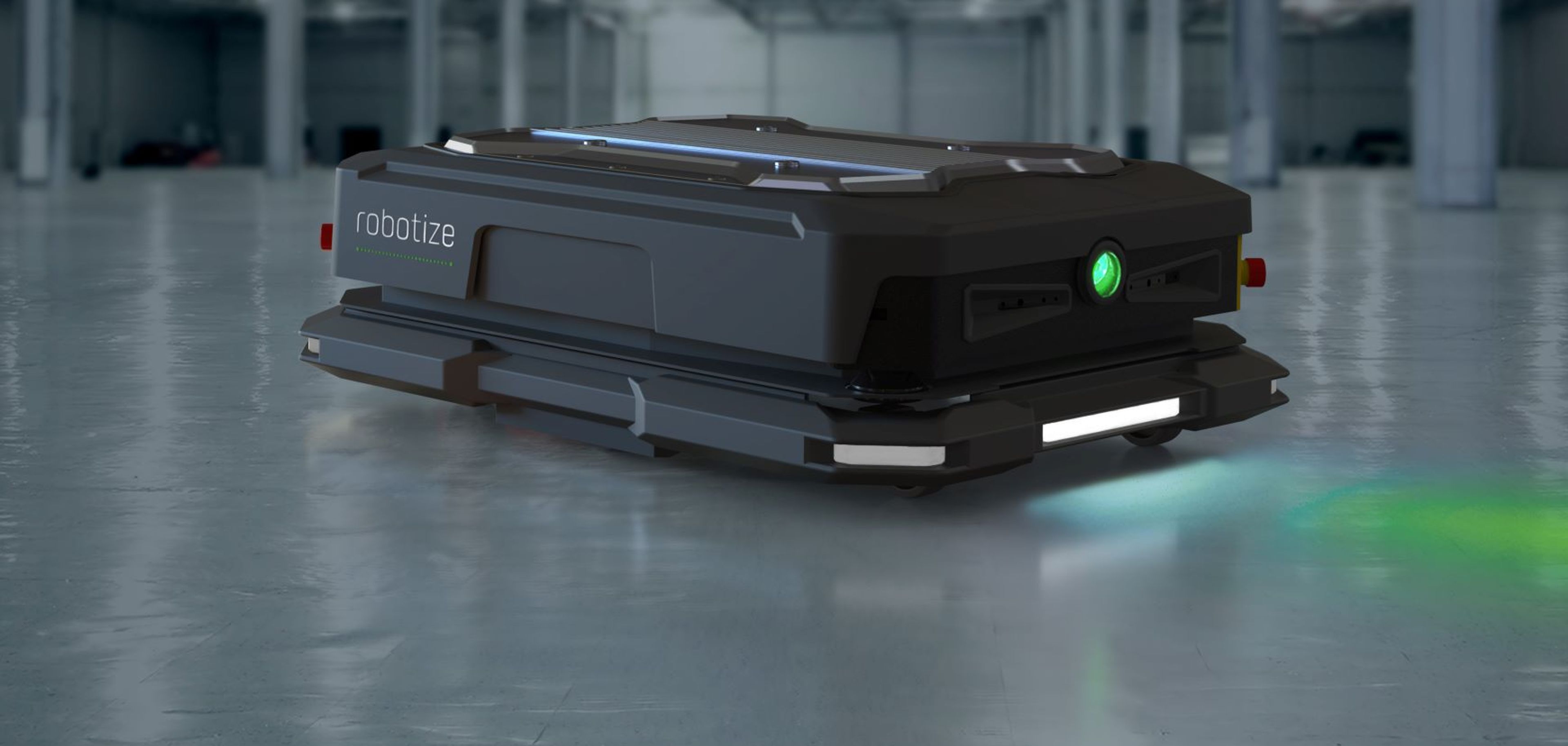
Autonomous mobile robots (AMRs) are becoming increasingly important in modern intralogistics. These driverless platform trucks are used for fully or partially automated goods transport, increasing efficiency in warehouses and logistics hotspots.
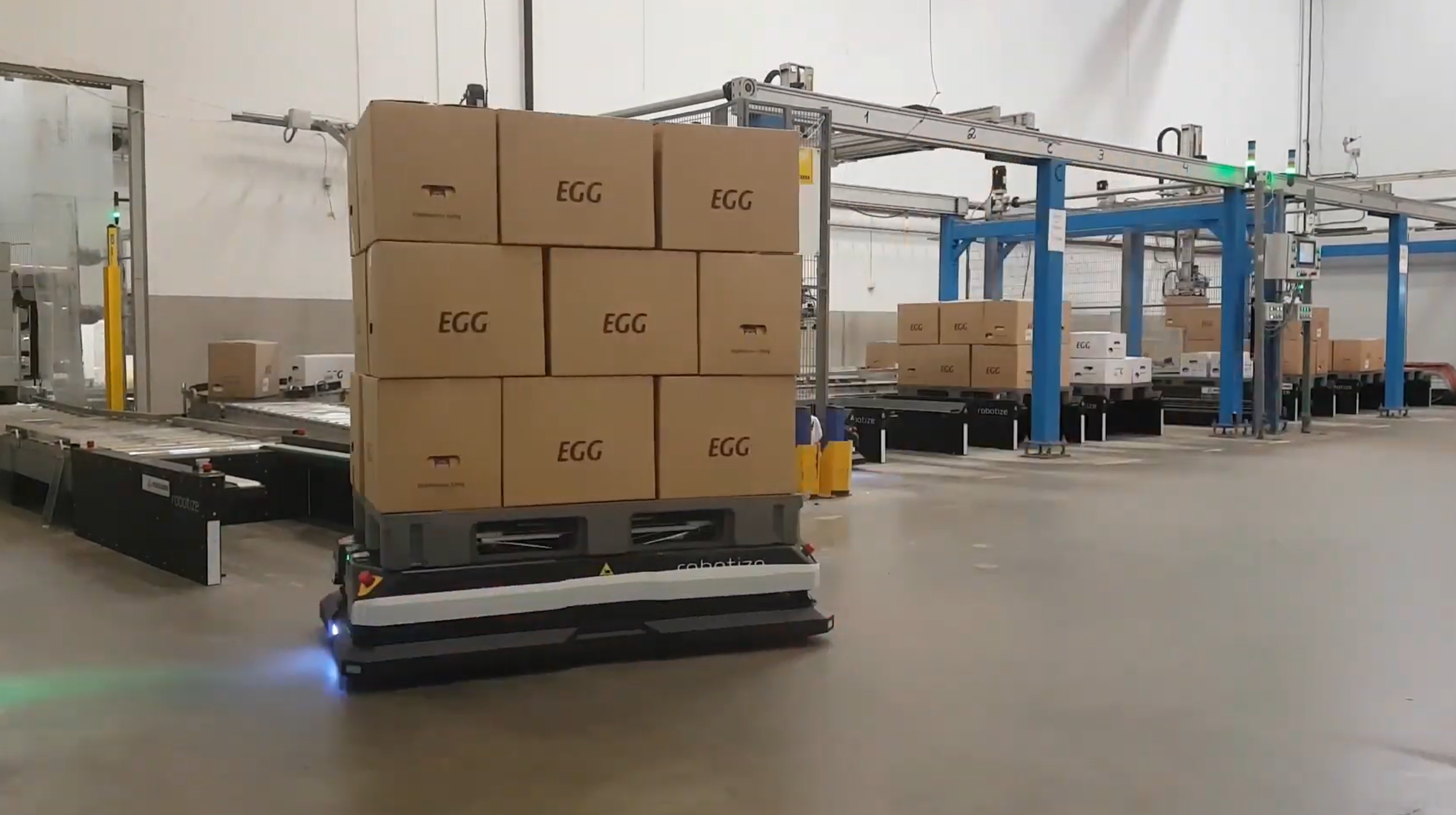
Today’s intralogistics is increasingly characterized by standardized processes, where goods are always transported back to precise positions using short and medium-length routes. Autonomous mobile robots significantly increase the efficiency of these processes. Depending on the model, AMRs can move loads of up to 1500 kilos per transport cycle.
See the full overview of AMR solutions we offer.
What is an AMR, and how does it differ from an AGV?
An AMR navigates independently using sensors, cameras and advanced mapping technology. This enables the robot to detect obstacles and find alternative routes in real time. An AGV (Automated Guided Vehicle) is more tied to predefined routes and is best suited for environments where processes are fully predictable. Read more about the differences in smart automation solutions.
Advantages
Investing in autonomous mobile robots can provide rapid gains for both operations and cost efficiency. The technology enables more flexible processes, increases safety and frees up time for other tasks. Some of the most important benefits include:
- Efficiency – automates repetitive transport tasks and frees up time for more value-creating work
- Lower costs – less need for manual movement and dedicated transport lanes
- Ergonomic picking – reduces walking distance and heavy lifting by bringing goods directly to the operator (Goods-to-Person principle)
- Increases handling capacity
- Safety – advanced sensors reduce the risk of accidents
- Compact and easy to maneuver, taking up no more space than the load itself and operating efficiently in tight areas
- Easy integration into existing processes and works seamlessly with other automated components in the warehouse
Robots in the Warehouse
Autonomous mobile robots (AMRs) are designed to work safely and efficiently in active warehouse environments. Thanks to modern safety technology, they can move in areas with both people and forklifts without risk of collisions. Sensors and cameras continuously monitor the surroundings, ensuring the robot can always adjust speed and route to the situation.
Depending on the model, AMRs use different navigation methods. Some use simple solutions like QR codes or marked paths on the floor, while more advanced models use SLAM technology (Simultaneous Localization and Mapping). SLAM allows the robot to build and update a digital map in real time using sensors, lasers and cameras.
This enables the AMR to adapt to changes in warehouse layout, find the most efficient route and work independently, without fixed installations or manual intervention. In practice, this means the robot works seamlessly in an existing warehouse, learns new routes as processes change and collaborates safely with both people and other machines.
Navigation without fixed paths
Because the robot can navigate on its own, there is no need to set up robot lanes or change the physical workspace for the solution to function optimally. The robot optimizes its routes independently and detects any obstacles that arise. The solution is therefore very safe for employees working in the same area.
Types of AMRs and examples
There are many types of AMRs, from compact models for light transport to more powerful solutions that handle pallets and heavy components. Among the most popular models are:
- Robotize GoPal series – models for pallet transport with different load capacities
- STILL AXH iGo – strong lifting capacity and SLAM navigation
- Linde C-Matic – transport for short to longer distances with a load capacity of up to 1500 kg
See the full overview of AMR solutions we offer.
Applications for AMRs
AMRs can be used in many types of businesses and processes, including:
- Warehousing and distribution
- Production facilities
- Transporting components between workstations
- Spare parts handling and material flow in production lines